

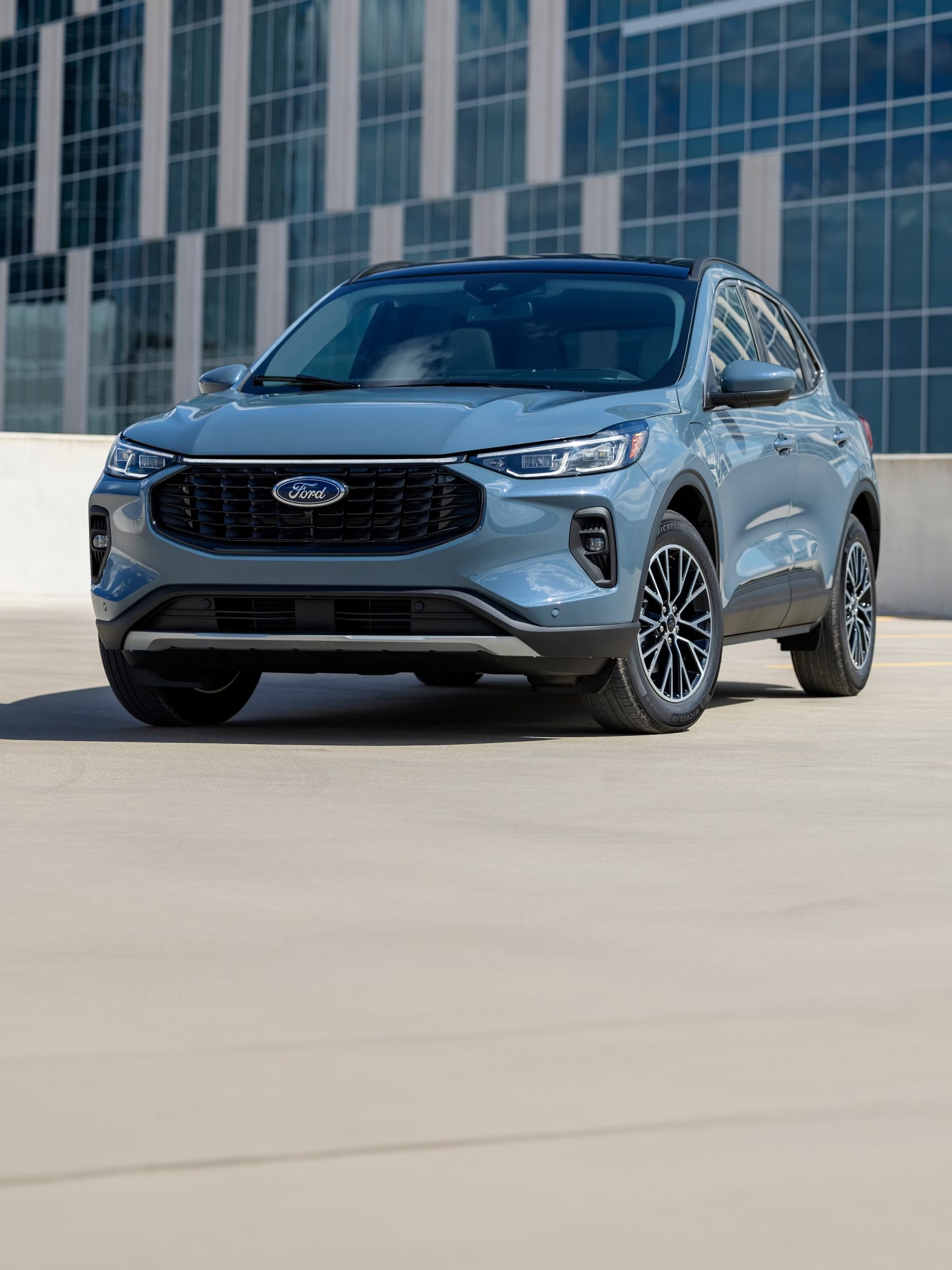
Choosing between a gas and hybrid powertrain is one of the more practical questions a car buyer can ask. The answer depends on how you drive, how many miles you put on a vehicle, and what you’re asking it to do. Understanding the gas vs hybrid Ford comparison clearly, without hype in either direction, is the best way to arrive at a decision that actually fits.
How the Two Powertrains Work
A conventional gas Ford runs on a combustion engine alone. Power is generated by burning fuel, sent through a transmission, and delivered to the wheels. The experience is familiar and the repair infrastructure is widespread.
A hybrid pairs a combustion engine with an electric motor and a battery pack that charges itself through regenerative braking. The system decides, moment to moment, whether to draw on gas power, electric power, or both. Most Ford hybrid models require no plugging in. The battery replenishes itself entirely through normal driving, which is why hybrid efficiency advantages are most pronounced in stop-and-go city conditions.
Fuel Economy Across Ford Hybrid Models
The lineup of Ford hybrid models currently spans trucks, SUVs, and compact pickups, and the efficiency gains are consistent across all of them.
The Maverick hybrid uses a 2.5L four-cylinder paired with an electric motor for 191 combined horsepower. The EPA rates it at 42 MPG city and 38 MPG combined with front-wheel drive, which outpaces many compact sedans. The EcoBoost gas version of the same truck returns around 26 MPG combined. That’s a gap of 12 MPG on the same vehicle.
The Escape hybrid uses a 2.5L Atkinson-cycle engine and electric motor for 192 horsepower, rated at 42 MPG city and 39 MPG combined with AWD. The gas-only 1.5L EcoBoost Escape returns around 30 MPG combined in FWD configuration.
The F-150 PowerBoost hybrid pairs a 3.5L twin-turbocharged V6 with an electric motor for 430 horsepower and 570 lb-ft of torque, rated up to 26 MPG. The comparable gas-only 3.5L EcoBoost in the same truck returns around 17 MPG city. On a vehicle driven 15,000 miles per year, even that smaller gap translates to hundreds of dollars annually.
Does the Gas vs Hybrid Ford Difference Change How the Vehicle Feels?
This is the question buyers less often think to ask. In most Ford hybrid models, the answer is nuanced. The Maverick hybrid, for instance, uses a continuously variable transmission that gives it a smooth, quiet character well-suited to city commuting. The EcoBoost version of the same truck has a more conventional powertrain feel with more immediate throttle response under hard acceleration.
The F-150 PowerBoost is a different case. Because the electric motor adds torque instantly and fills gaps between combustion pulses, many drivers find it smoother and more responsive at everyday speeds than a gas-only F-150, not less. The PowerBoost also includes Pro Power Onboard, which provides up to 7.2 kW of exportable electricity through outlets in the bed, turning the truck into a mobile generator for job sites, camping, or power outages.
What does the hybrid driving experience feel like on local roads? For most buyers, it feels largely like any other Ford, with quieter low-speed operation and more seamless acceleration. The transition between electric and gas modes is not noticeable in normal driving.
Long-Term Cost Considerations
Hybrid vehicles typically carry a higher purchase price than their gas counterparts. The Maverick hybrid starts around $28,145, while the PowerBoost option on the F-150 adds roughly $1,900 to the build.
The gas vs hybrid Ford cost picture over time depends heavily on annual mileage. Higher-mileage drivers recoup the hybrid premium faster through fuel savings. Buyers who drive 20,000 or more miles per year in vehicles like the Maverick or Escape hybrid often see meaningful cumulative savings within three to four years. Lower-mileage drivers may find the gas option pencils out more favorably.
Maintenance costs are comparable. Ford hybrid batteries carry an 8-year/100,000-mile warranty, and regenerative braking tends to reduce brake wear compared to gas-only vehicles.
Our team at Cloninger Ford in Salisbury can walk through the numbers using your actual driving habits. Whether you’re leaning toward the Maverick, Escape, or F-150, there’s a gas and hybrid configuration worth comparing side by side.
Frequently Asked Questions About Gas vs. Hybrid Ford Vehicles
Do Ford hybrid models require plugging in?
Standard Ford hybrid models, including the Maverick hybrid, Escape hybrid, and F-150 PowerBoost, do not require plugging in. The battery charges through regenerative braking while you drive. The Escape Plug-In Hybrid is the exception, offering an optional 37-mile electric-only range when charged.
Is the gas vs. hybrid decision mostly about fuel savings?
Fuel savings are a major factor, but not the only one. Driving feel, towing needs, and how you’ll use the vehicle all matter. The F-150 PowerBoost, for example, adds both efficiency and a 7.2 kW onboard generator, which changes the value calculation for buyers who work out of their trucks.
How long do Ford hybrid batteries last?
Ford covers hybrid batteries with an 8-year/100,000-mile warranty. In real-world use, hybrid batteries in vehicles like the Maverick and Escape have demonstrated strong durability well beyond that threshold with routine maintenance.
Which Ford hybrid models are available at Cloninger Ford?
Cloninger Ford carries hybrid models including the Maverick hybrid, Escape hybrid, and F-150 PowerBoost. Inventory varies, so contact the dealership or check current stock online to see what’s available in Salisbury.
Connect with us
