
Cloninger Ford of Salisbury

Blog / Cloninger Ford

How Ford Cooling Systems Handle Southern Heat

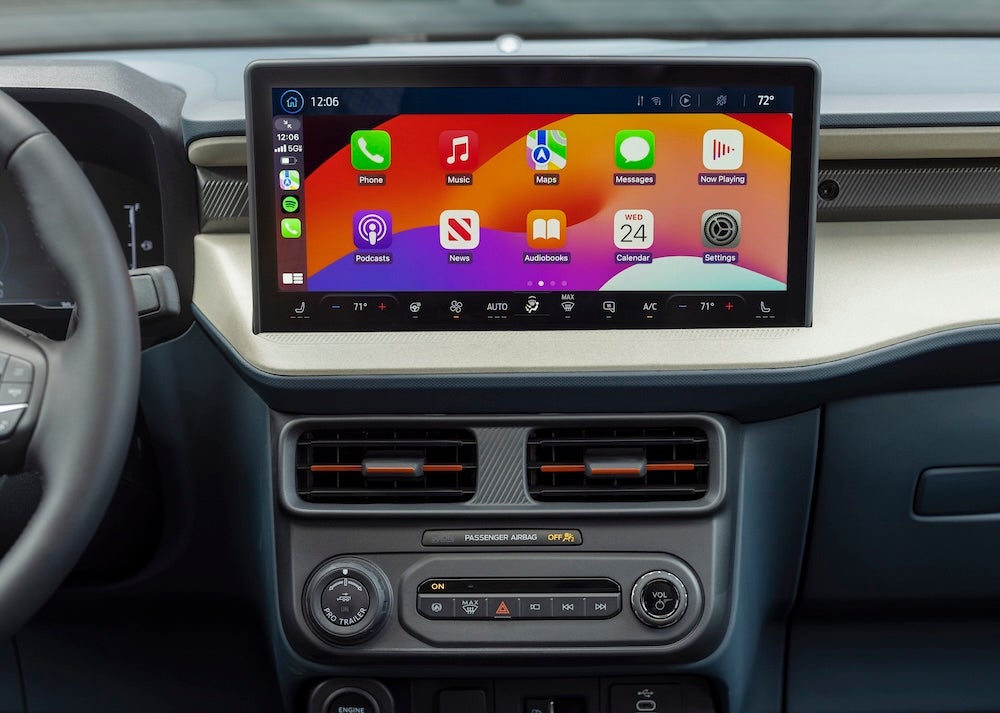
Ford Maverick dashboard

North Carolina summers put vehicles through a sustained test that milder climates never deliver. Weeks of high humidity, stop-and-go traffic in 95-degree heat, and long highway stretches with the AC running hard all place consistent demand on the one system responsible for keeping your engine from destroying itself: the cooling system. Understanding how a Ford cooling system works, what it's designed to handle, and which maintenance steps support engine overheating prevention gives Salisbury drivers a real advantage heading into the hottest months.

How the Ford Cooling System Actually Works

The cooling system is a pressurized, closed-loop network built around a single goal: pulling heat away from the engine before temperatures climb high enough to cause damage. Coolant, which is a mixture of water and antifreeze, circulates through passages in the engine block and cylinder heads, absorbing combustion heat as it moves. From there it flows through the upper radiator hose into the radiator, where air passing through the fins draws the heat out. The cooled fluid then returns through the lower hose and the cycle begins again.

The thermostat acts as the system's gatekeeper. When the engine is cold, the thermostat stays closed and recirculates coolant within the engine to help it reach operating temperature faster. Once the engine warms to the designed threshold, typically around 190 to 200 degrees Fahrenheit on modern Ford engines, the thermostat opens and allows full flow to the radiator. The water pump, driven by the serpentine belt, maintains that circulation under pressure throughout the entire process.

What Southern Heat Actually Does to These Components

A Ford cooling system is engineered to handle demanding conditions, but sustained southern heat accelerates wear on specific components in predictable ways. Coolant degrades over time, losing the corrosion inhibitors that protect the radiator and internal passages. Ford recommends flushing coolant on most models every 100,000 miles or five years, but vehicles that frequently operate in extreme heat benefit from checking condition more often than that schedule suggests.

Hoses and belts are the components most visibly affected by heat cycling. The repeated expansion and contraction of rubber under high underhood temperatures causes hoses to harden, crack, or develop soft spots, any of which can lead to a coolant leak that drains the system in minutes. A failing belt eliminates the water pump's ability to circulate coolant, which produces the same result: a rapid spike toward engine-damaging temperatures. Checking these components before summer is one of the most direct engine overheating prevention steps a driver can take.

The Thermostat and Water Pump: Two Points of Failure to Know

Is a thermostat failure something that shows up gradually, or does it happen without warning? Both scenarios occur. A thermostat that sticks closed prevents coolant from reaching the radiator entirely, causing the temperature gauge to climb quickly toward the danger zone. One that sticks open keeps coolant flowing even when the engine is cold, which affects fuel economy and emissions but rarely causes immediate damage. Water pump failure typically develops between 80,000 and 120,000 miles, often announcing itself with a small coolant leak at the pump seal or a grinding noise from the bearing before it becomes a full failure.

Ford's EcoBoost turbocharged engines, found across the F-150, Explorer, Escape, and Bronco Sport lineups, generate additional heat under load compared to naturally aspirated engines. That makes engine overheating prevention particularly relevant for EcoBoost owners who do a lot of towing, hauling, or extended highway driving during summer months.

What to Watch For and When to Come In

The temperature gauge is your first and most reliable indicator. If it climbs above the normal operating range during typical driving, that's a signal to pull over, let the engine cool, and have the system inspected before driving further. A sweet, slightly syrupy smell near the engine bay often indicates a coolant leak even before a visible puddle appears. White smoke from the exhaust can signal coolant entering the combustion chamber, which points to a more serious failure like a head gasket.

The service team at Cloninger Ford in Salisbury, NC performs full cooling system inspections that cover coolant condition and concentration, hose and belt integrity, thermostat function, and water pump condition. Catching a worn hose or low coolant before summer peaks is far less expensive than the alternative, and it keeps your Ford cooling system working the way Ford built it to.


Frequently Asked Questions About How Ford Cooling Systems Handle Southern Heat

How often should I flush the coolant in my Ford?

Ford recommends a coolant flush every 100,000 miles or five years for most models. Vehicles that regularly operate in extreme heat or do frequent towing may benefit from more frequent checks of coolant condition and concentration.

What are the early warning signs of a Ford cooling system problem?

Watch for the temperature gauge rising above the normal range, a sweet smell near the engine bay indicating a coolant leak, coolant pooling under the vehicle, or a grinding noise from the water pump area. Any of these warrant an inspection before they develop into engine damage.

Do Ford EcoBoost engines have different cooling system needs than standard engines?

EcoBoost turbocharged engines generate more heat under heavy load than naturally aspirated engines, making engine overheating prevention more critical for drivers who tow, haul frequently, or do extended highway driving in summer heat. Regular cooling system maintenance is especially important for these engines.

Can I drive my Ford if the temperature gauge is reading high?

No. Pull over safely, turn off the engine, and allow it to cool before checking coolant levels. Continuing to drive with an overheating engine risks severe damage to head gaskets, cylinder heads, and other internal components that are far more expensive to repair than a cooling system service.

Posted in:

Related Posts

Ford Escape hybrid

Gas vs. Hybrid Ford: Costs, Driving Feel, and The Long-Term

Choosing between a gas and hybrid powertrain is one of the more practical questions a car buyer can ask. The answer depends on how you drive, how many miles you put on a vehicle, and what you're asking it to do. Understanding the gas vs hybrid Ford comparison clearly, without hype in either direction, is the best way to arrive at a decision that actually fits. more How the Two Powertrains Work A conventional gas Ford runs on a combustion engine alone. Power is generated by burning fuel, sent through a transmission, and delivered to the wheels. The experience is familiar and the repair infrastructure is widespread. A hybrid pairs a combustion engine with an electric motor and a battery pack that charges itself through regenerative braking. The system decides, moment to moment, whether to draw on gas power, electric power, or both. Most Ford hybrid models require no plugging in. The battery replenishes itself entirely through normal driving, which is why hybrid efficiency advantages are most pronounced in stop-and-go city conditions. Fuel Economy Across Ford Hybrid Models The lineup of Ford hybrid models currently spans trucks, SUVs, and compact pickups, and the efficiency gains are consistent across all of them. The Maverick hybrid uses a 2.5L four-cylinder paired with an electric motor for 191 combined horsepower. The EPA rates it at 42 MPG city and 38 MPG combined with front-wheel drive, which outpaces many compact sedans. The EcoBoost gas version of the same truck returns around 26 MPG combined. That's a gap of 12 MPG on the same vehicle. The Escape hybrid uses a 2.5L Atkinson-cycle engine and electric motor for 192 horsepower, rated at 42 MPG city and 39 MPG combined with AWD. The gas-only 1.5L EcoBoost Escape returns around 30 MPG combined in FWD configuration. The F-150 PowerBoost hybrid pairs a 3.5L twin-turbocharged V6 with an electric motor for 430 horsepower and 570 lb-ft of torque, rated up to 26 MPG. The comparable gas-only 3.5L EcoBoost in the same truck returns around 17 MPG city. On a vehicle driven 15,000 miles per year, even that smaller gap translates to hundreds of dollars annually. Does the Gas vs Hybrid Ford Difference Change How the Vehicle Feels? This is the question buyers less often think to ask. In most Ford hybrid models, the answer is nuanced. The Maverick hybrid, for instance, uses a continuously variable transmission that gives it a smooth, quiet character well-suited to city commuting. The EcoBoost version of the same truck has a more conventional powertrain feel with more immediate throttle response under hard acceleration. The F-150 PowerBoost is a different case. Because the electric motor adds torque instantly and fills gaps between combustion pulses, many drivers find it smoother and more responsive at everyday speeds than a gas-only F-150, not less. The PowerBoost also includes Pro Power Onboard, which provides up to 7.2 kW of exportable electricity through outlets in the bed, turning the truck into a mobile generator for job sites, camping, or power outages. What does the hybrid driving experience feel like on local roads? For most buyers, it feels largely like any other Ford, with quieter low-speed operation and more seamless acceleration. The transition between electric and gas modes is not noticeable in normal driving. Long-Term Cost Considerations Hybrid vehicles typically carry a higher purchase price than their gas counterparts. The Maverick hybrid starts around $28,145, while the PowerBoost option on the F-150 adds roughly $1,900 to the build. The gas vs hybrid Ford cost picture over time depends heavily on annual mileage. Higher-mileage drivers recoup the hybrid premium faster through fuel savings. Buyers who drive 20,000 or more miles per year in vehicles like the Maverick or Escape hybrid often see meaningful cumulative savings within three to four years. Lower-mileage drivers may find the gas option pencils out more favorably. Maintenance costs are comparable. Ford hybrid batteries carry an 8-year/100,000-mile warranty, and regenerative braking tends to reduce brake wear compared to gas-only vehicles. Our team at Cloninger Ford in Salisbury can walk through the numbers using your actual driving habits. Whether you're leaning toward the Maverick, Escape, or F-150, there's a gas and hybrid configuration worth comparing side by side. Frequently Asked Questions About Gas vs. Hybrid Ford Vehicles Do Ford hybrid models require plugging in? Standard Ford hybrid models, including the Maverick hybrid, Escape hybrid, and F-150 PowerBoost, do not require plugging in. The battery charges through regenerative braking while you drive. The Escape Plug-In Hybrid is the exception, offering an optional 37-mile electric-only range when charged. Is the gas vs. hybrid decision mostly about fuel savings? Fuel savings are a major factor, but not the only one. Driving feel, towing needs, and how you'll use the vehicle all matter. The F-150 PowerBoost, for example, adds both efficiency and a 7.2 kW onboard generator, which changes the value calculation for buyers who work out of their trucks. How long do Ford hybrid batteries last? Ford covers hybrid batteries with an 8-year/100,000-mile warranty. In real-world use, hybrid batteries in vehicles like the Maverick and Escape have demonstrated strong durability well beyond that threshold with routine maintenance. Which Ford hybrid models are available at Cloninger Ford? Cloninger Ford carries hybrid models including the Maverick hybrid, Escape hybrid, and F-150 PowerBoost. Inventory varies, so contact the dealership or check current stock online to see what's available in Salisbury.

2025 Ford Maverick

How Ford Pro Power Onboard Changes What You Can Do with a Truck

Most trucks have always had a single outlet tucked somewhere in the cab, good for charging a phone or running a small light. Ford Pro Power Onboard is something entirely different. Built directly into the F-150's architecture, it turns your truck into a functioning mobile generator capable of powering tools, appliances, and job site equipment from the bed or cab without a separate generator in tow. For drivers in Rowan County who work on job sites, head outdoors on weekends, or want a truck that does more than haul, this feature changes the equation. more Three Output Levels for Three Different Needs Ford Pro Power Onboard comes in three configurations, and the right one depends on what you actually need to run. The 2.0 kW system is available on gas-engine F-150 models equipped with the 2.7L EcoBoost V6, the 3.5L EcoBoost V6, or the 5.0L V8. It delivers power through two 120V/20A outlets in the truck bed, enough to run a reciprocating saw, hammer drill, jigsaw, or sander, and the truck's cabin outlets provide 400 watts for smaller devices on the instrument panel and center console regardless of which tier you choose. The 2.4 kW system is standard on F-150s equipped with the 3.5L PowerBoost Full Hybrid V6 and adds the capacity to run a microwave alongside the tools the 2.0 kW handles. What makes this tier stand out is runtime: at its maximum load, the 2.4 kW system runs for up to 85 hours on a full tank of gas, making it a serious asset for extended remote work or multi-day camp trips. The 7.2 kW system is the top tier, available as an option on PowerBoost Hybrid models and the F-150 Platinum Plus. It delivers 7,200 watts through four 120V/20A outlets and one 240V/30A outlet. For reference, a typical portable generator produces around 3,500-4,000 watts. The 7.2 kW system can simultaneously power a plasma cutter, TIG welder, chop saw, air compressor, angle grinder, and work light, and it does so for up to 32 hours at maximum load on a full tank of gas. That is a full working day and then some, without refueling or swapping equipment. What Does This Mean in Practice? Is this feature practical only for contractors? Not at all. The Ford truck power outlet system covers a wide range of situations. On a job site without utility power run yet, a single F-150 with the 7.2 kW system can power an entire framing crew's tool setup. At a campsite, it runs lights, a portable heater, a cooler, and speakers from the same truck that hauled the trailer there. During a tailgate, it powers a television, a blender, and sound equipment. Ford also designed the system to operate while the truck is moving, so devices can charge or run on the way to the job site or trail. The truck can be locked while idling in generator mode, providing overnight security when the system is running unattended. Monitoring is handled through the 12-inch center touchscreen or the FordPass app, both of which display real-time wattage draw and alert you if total load approaches the system's limit. The Ford truck power outlet system manages load automatically, and if a circuit is tripped, it can be reset directly from the truck bed's outlet panel on the 7.2 kW system. Find the Right F-150 Configuration in Salisbury Choosing between the three output tiers comes down to how you use your truck day to day. Drivers in Salisbury, Kannapolis, and Lexington who need basic job site capability or a weekend power source will likely find the 2.0 kW system sufficient. Those running a crew or working in remote locations will benefit from the PowerBoost Hybrid and its 2.4 kW or 7.2 kW output. The team at Cloninger Ford on Jake Alexander Boulevard can walk you through which F-150 configurations include Ford Pro Power Onboard and help you match the right output level to the work you do. It is one of the most practical capabilities on any truck in the segment, and Cloninger Ford has the inventory to put you in the right one. Frequently Asked Questions About Ford Pro Power Onboard What are the output levels for Ford Pro Power Onboard on the F-150? The F-150 offers 2.0 kW, 2.4 kW, and 7.2 kW configurations. The 2.0 kW is available on select gas engines, the 2.4 kW is standard on the PowerBoost Hybrid, and the 7.2 kW is optional on PowerBoost models and standard on the Platinum Plus. How long can the Ford Pro Power Onboard system run on a full tank? At maximum load, the 2.4 kW system runs up to 85 hours and the 7.2 kW system runs up to 32 hours on a full tank of gas. At lighter loads, runtime extends further. What does the Ford truck power outlet system actually power? Depending on the tier, the Ford truck power outlet can run circular saws, drills, compressors, microwaves, welders, televisions, and camping appliances. The 7.2 kW system can run a plasma cutter, TIG welder, chop saw, and air compressor simultaneously. Can I use Ford Pro Power Onboard while driving? Yes. The system operates while the truck is in motion, allowing tools and devices to charge or run on the way to a job site or campground.

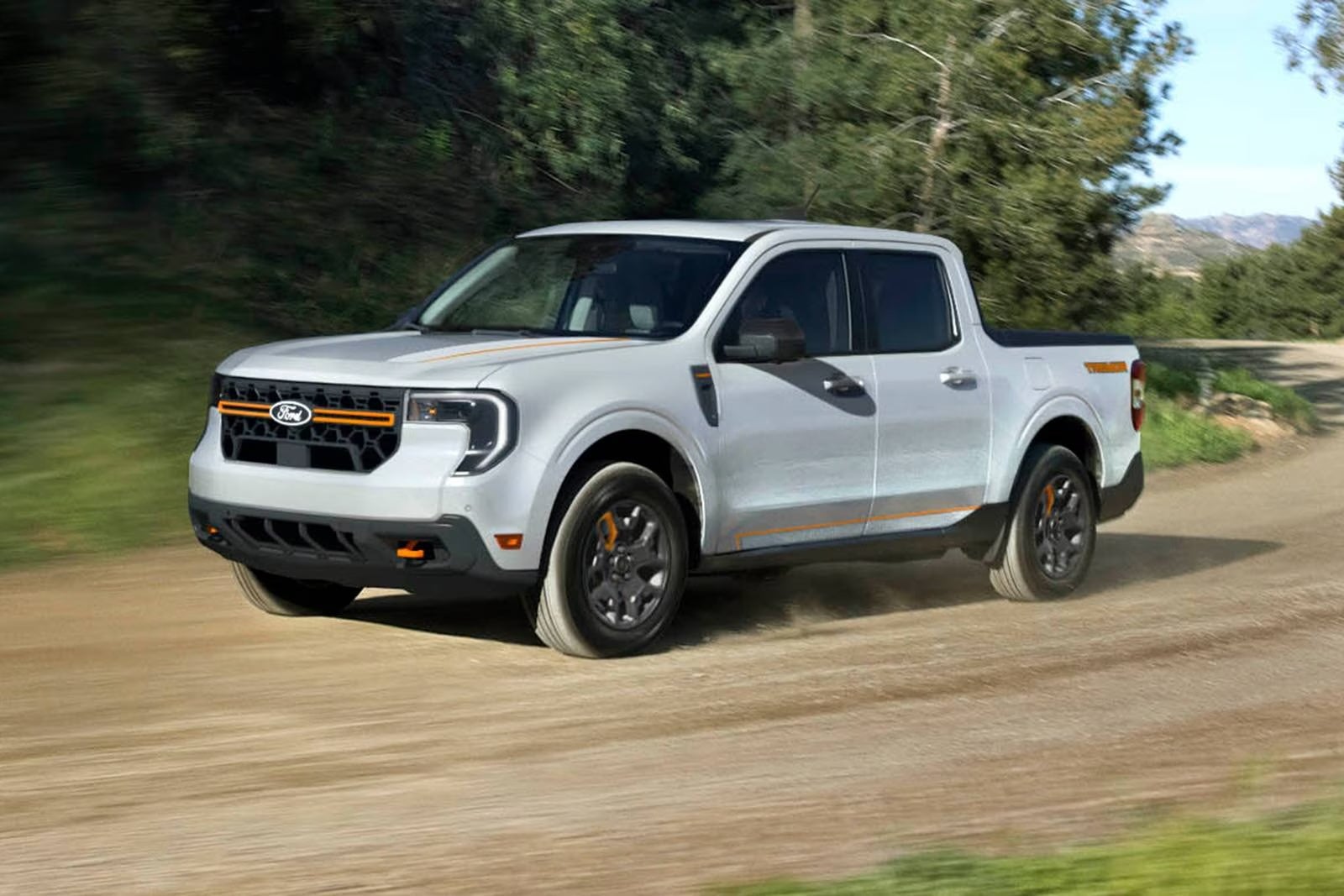
2026 Ford Maverick

The 2026 Ford Maverick: Built for City and Country Roads

Most trucks are designed with one type of driver in mind. The 2026 Ford Maverick was built for both. At under 200 inches long, it parks where a full-size never could, earns up to 42 MPG in city driving, and still hauls a load or tows a trailer when the weekend calls for it. For drivers around Salisbury who commute into Charlotte or spend their weekends on rural roads and back-country property, the Ford Maverick occupies a genuinely useful middle ground that few vehicles can match. more Why the Maverick Works in Charlotte Traffic The case for the 2026 Ford Maverick as a city-capable vehicle starts with its dimensions. At 199.7 inches in length, it's considerably shorter than a midsize truck and parks without the maneuvering that larger pickups require in urban lots and tight downtown streets. Charlotte drivers familiar with the difficulty of finding parking in South End or Uptown will recognize immediately why that matters. Fuel economy is the other pillar of the Maverick's city appeal. The standard 2.5L full hybrid powertrain pairs a four-cylinder engine with an electric motor for 191 combined horsepower and an EPA-estimated 42 MPG in city driving, 35 on the highway, and 38 combined. That's a number typically associated with compact cars, not trucks. The hybrid uses a continuously variable transmission and charges itself through regenerative braking, so there's no plugging in required. For a driver putting in regular miles on I-85 between Salisbury and Charlotte, the fuel savings compound quickly. Is the Maverick comfortable enough for regular highway commuting? Yes. The crew cab seats five with 36.9 inches of rear legroom, and the standard 13.2-inch touchscreen runs wireless Apple CarPlay and Android Auto. The Ford Connectivity Package, now standard on all 2026 trims, includes a one-year trial of an unlimited Wi-Fi hotspot supporting up to 10 devices. Where the Maverick Earns Its Truck Credentials The Ford Maverick for sale at Cloninger Ford isn't just efficient, it's functional. The standard towing capacity is 2,000 pounds, which handles a small boat, a utility trailer, or a loaded landscaping rig. Adding the available 4K Tow Package raises that ceiling to 4,000 pounds, which opens up a wider range of work and recreational use. Payload capacity stands at 1,500 pounds with the 4.5-foot bed. What makes the Maverick's bed stand out from other compact trucks is the FLEXBED design. The bed walls include integrated slots sized to fit 2x4 and 2x6 lumber, letting you build custom dividers, elevated floors, bike racks, or kayak carriers without drilling or buying aftermarket hardware. Four D-rings, two tie-down cleats, and 12-volt power outlets pre-wired on both sides of the bed make it genuinely useful for work and hauling. For drivers who spend time off paved roads, the Tremor trim builds on the Ford Maverick for sale lineup with off-road suspension tuning, an electronically locking rear differential, Trail Control low-speed cruise, underbody skid plates, and all-terrain tires on 17-inch wheels. The XLT trim can also be equipped with the FX4 Off-Road Package, which adds performance suspension, skid plates, and all-terrain tires at a lower price point. Choosing the Right Powertrain The hybrid is the default choice for most buyers and the one that makes the strongest case as a daily driver. For those who prioritize towing capability or need more power for loaded hauling, the 2.0L EcoBoost turbocharged engine produces 250 horsepower and 280 lb-ft of torque paired with an eight-speed automatic. New for the 2026 Ford Maverick, the EcoBoost is also available in front-wheel drive configuration, which lowers the entry cost compared to the previously AWD-only setup. Our team at Cloninger Ford in Salisbury, NC can help you work through which trim and powertrain combination fits how you actually use a truck, whether that's a hybrid XLT for the daily commute to Charlotte or a Tremor for weekend property work. Stop in to see the current Ford Maverick for sale inventory today! Frequently Asked Questions About the 2026 Ford Maverick What is the fuel economy of the 2026 Ford Maverick hybrid? The 2026 Ford Maverick hybrid with FWD is EPA-estimated at 42 MPG city, 35 highway, and 38 combined. With AWD, the ratings are 40 city, 34 highway, and 37 combined. How much can the 2026 Ford Maverick tow? Standard towing capacity is 2,000 pounds. Adding the available 4K Tow Package raises the maximum to 4,000 pounds. The EcoBoost engine is required to reach the 4,000-pound rating. What is the FLEXBED on the Ford Maverick for sale at Cloninger Ford? The FLEXBED is Maverick's exclusive cargo system that includes integrated slots sized for 2x4 and 2x6 lumber, allowing owners to build custom storage solutions, bike racks, and cargo dividers without drilling. The bed also includes four D-rings, tie-down cleats, and built-in 12-volt power outlets. Does the 2026 Ford Maverick come in an off-road version? Yes. The Tremor trim includes off-road suspension, an electronically locking rear differential, Trail Control, underbody skid plates, and all-terrain tires. The XLT also offers the available FX4 Off-Road Package for buyers who want light off-road capability at a lower price.