Related Posts
9 Reasons to Make the 2021 Ford Ranger Your Next Pickup Truck
There are too many reasons to cover why so many buyers have chosen the 2021 Ford Ranger as their pickup. These features are some of the top reasons to make the Ranger your next truck. The price also has a lot to do with why this vehicle is so popular. The base model starts at only $25,000. more 1. New Stuff for 2021 The cosmetic changes to the 2021 Ranger are tasteful and give buyers the option of a range of new colors. Blue, two different gray tones, and a trendy orange color that is popular with younger buyers. 2. Black Appearance Package Buyers have the option of a black appearance package that gives the pickup truck black accents. The appearance package is particularly stunning on the orange exterior paint option. 3. Perfect Pickup Size The mid-size 2021 Ranger is extremely popular with drivers and buyers because Ford seems to have found the perfect build size. The truck is not over-burdened by size, and the power plant gives the pickup truck agility not seen before these dimensions. 4. Rear-Wheel-Drive A front-wheel-drive pickup just doesn't sit right with those looking for a truck. Rear-wheel-drive is what pickup drivers are looking for. The option of all-wheel-drive technology to deliver power between the back and front wheels for extra grip is also a top choice for buyers. 5. High-Performance Powertrain The 2.3-liter engine is highly tuned for loads of wheel turning and wheel-spinning power. The power plant is extra responsive due to the ten-speed automatic transmission, and the power plant delivers a more than energetic 270 horsepower with a whopping 310 pound-feet of torque. 6. Extra Appearance Packages Bigger rims that fill up those wheel arches look stunning on the 2021 Ranger. Wherever you are, in the city or driving the trails of thick woods, the high stance of the 2021 Ranger looks at home. Standard 16-inch rims are available, but many choose the 17-inch and the enormous 18-inch rims to give the Ranger even more space from the ground. 7. Excellent Pricing Range The standard XL Ranger model has most of the features pickup drivers want at only $25,000. The 2021 XLT Ranger is available for $29,000 with some extras that make a difference. The Lariat trim comes with all the extra options you could want and is available for under $33,000. The 2021 Ranger is priced well to suit a range of pickup driver buyers. 8. Driver-Friendly Features The substantial list of driver-assist technologies is not just for keeping up with other smaller mid-size pickup trucks following Ford into the category it created. Even the 2021 Ranger base model comes with automatic emergency braking. Additional extras include automatic high beam and blind-spot monitoring. The blind-spot monitoring package is also designed to know where the trailer is. 9. Infotainment Beyond for All With an infotainment system that syncs with Apple CarPlay and Android Auto with ease, Ford Pass Connect technology also provides a Wi-Fi hotspot capable of connecting to 10 devices. The Wi-Fi hotspot network is powerful enough to share interconnectivity 50 feet from the vehicle. The connectivity does not stop there with SiriusXM Traffic and Travel Link. The optional extras to keep drivers up-to-date on road conditions ahead. Add the SuperCab and the SuperCrew body-style cab configurations and the additional Tremor package toughing up the 2021 Ranger with a heavy-duty skid plate, off-road suspension, and stylish exterior updates add to the list of reasons to choose the 2021 Ranger as your next pickup. Get yourself behind the steering wheel by booking a test drive with Cloninger Ford of Salisbury now.
Gas vs. Hybrid Ford: Costs, Driving Feel, and The Long-Term
Choosing between a gas and hybrid powertrain is one of the more practical questions a car buyer can ask. The answer depends on how you drive, how many miles you put on a vehicle, and what you're asking it to do. Understanding the gas vs hybrid Ford comparison clearly, without hype in either direction, is the best way to arrive at a decision that actually fits. more How the Two Powertrains Work A conventional gas Ford runs on a combustion engine alone. Power is generated by burning fuel, sent through a transmission, and delivered to the wheels. The experience is familiar and the repair infrastructure is widespread. A hybrid pairs a combustion engine with an electric motor and a battery pack that charges itself through regenerative braking. The system decides, moment to moment, whether to draw on gas power, electric power, or both. Most Ford hybrid models require no plugging in. The battery replenishes itself entirely through normal driving, which is why hybrid efficiency advantages are most pronounced in stop-and-go city conditions. Fuel Economy Across Ford Hybrid Models The lineup of Ford hybrid models currently spans trucks, SUVs, and compact pickups, and the efficiency gains are consistent across all of them. The Maverick hybrid uses a 2.5L four-cylinder paired with an electric motor for 191 combined horsepower. The EPA rates it at 42 MPG city and 38 MPG combined with front-wheel drive, which outpaces many compact sedans. The EcoBoost gas version of the same truck returns around 26 MPG combined. That's a gap of 12 MPG on the same vehicle. The Escape hybrid uses a 2.5L Atkinson-cycle engine and electric motor for 192 horsepower, rated at 42 MPG city and 39 MPG combined with AWD. The gas-only 1.5L EcoBoost Escape returns around 30 MPG combined in FWD configuration. The F-150 PowerBoost hybrid pairs a 3.5L twin-turbocharged V6 with an electric motor for 430 horsepower and 570 lb-ft of torque, rated up to 26 MPG. The comparable gas-only 3.5L EcoBoost in the same truck returns around 17 MPG city. On a vehicle driven 15,000 miles per year, even that smaller gap translates to hundreds of dollars annually. Does the Gas vs Hybrid Ford Difference Change How the Vehicle Feels? This is the question buyers less often think to ask. In most Ford hybrid models, the answer is nuanced. The Maverick hybrid, for instance, uses a continuously variable transmission that gives it a smooth, quiet character well-suited to city commuting. The EcoBoost version of the same truck has a more conventional powertrain feel with more immediate throttle response under hard acceleration. The F-150 PowerBoost is a different case. Because the electric motor adds torque instantly and fills gaps between combustion pulses, many drivers find it smoother and more responsive at everyday speeds than a gas-only F-150, not less. The PowerBoost also includes Pro Power Onboard, which provides up to 7.2 kW of exportable electricity through outlets in the bed, turning the truck into a mobile generator for job sites, camping, or power outages. What does the hybrid driving experience feel like on local roads? For most buyers, it feels largely like any other Ford, with quieter low-speed operation and more seamless acceleration. The transition between electric and gas modes is not noticeable in normal driving. Long-Term Cost Considerations Hybrid vehicles typically carry a higher purchase price than their gas counterparts. The Maverick hybrid starts around $28,145, while the PowerBoost option on the F-150 adds roughly $1,900 to the build. The gas vs hybrid Ford cost picture over time depends heavily on annual mileage. Higher-mileage drivers recoup the hybrid premium faster through fuel savings. Buyers who drive 20,000 or more miles per year in vehicles like the Maverick or Escape hybrid often see meaningful cumulative savings within three to four years. Lower-mileage drivers may find the gas option pencils out more favorably. Maintenance costs are comparable. Ford hybrid batteries carry an 8-year/100,000-mile warranty, and regenerative braking tends to reduce brake wear compared to gas-only vehicles. Our team at Cloninger Ford in Salisbury can walk through the numbers using your actual driving habits. Whether you're leaning toward the Maverick, Escape, or F-150, there's a gas and hybrid configuration worth comparing side by side. Frequently Asked Questions About Gas vs. Hybrid Ford Vehicles Do Ford hybrid models require plugging in? Standard Ford hybrid models, including the Maverick hybrid, Escape hybrid, and F-150 PowerBoost, do not require plugging in. The battery charges through regenerative braking while you drive. The Escape Plug-In Hybrid is the exception, offering an optional 37-mile electric-only range when charged. Is the gas vs. hybrid decision mostly about fuel savings? Fuel savings are a major factor, but not the only one. Driving feel, towing needs, and how you'll use the vehicle all matter. The F-150 PowerBoost, for example, adds both efficiency and a 7.2 kW onboard generator, which changes the value calculation for buyers who work out of their trucks. How long do Ford hybrid batteries last? Ford covers hybrid batteries with an 8-year/100,000-mile warranty. In real-world use, hybrid batteries in vehicles like the Maverick and Escape have demonstrated strong durability well beyond that threshold with routine maintenance. Which Ford hybrid models are available at Cloninger Ford? Cloninger Ford carries hybrid models including the Maverick hybrid, Escape hybrid, and F-150 PowerBoost. Inventory varies, so contact the dealership or check current stock online to see what's available in Salisbury.
How Ford Pro Power Onboard Changes What You Can Do with a Truck
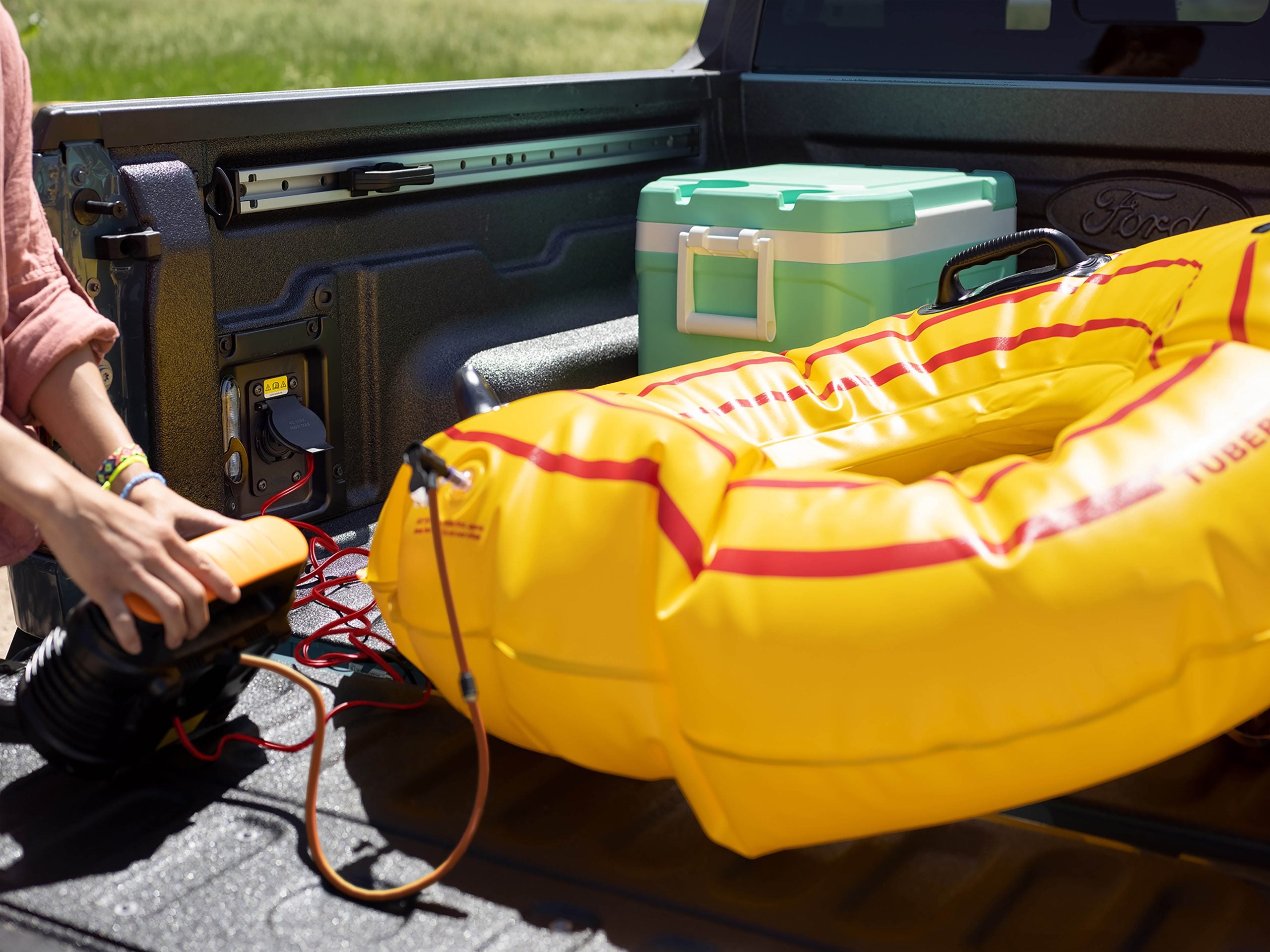
Most trucks have always had a single outlet tucked somewhere in the cab, good for charging a phone or running a small light. Ford Pro Power Onboard is something entirely different. Built directly into the F-150's architecture, it turns your truck into a functioning mobile generator capable of powering tools, appliances, and job site equipment from the bed or cab without a separate generator in tow. For drivers in Rowan County who work on job sites, head outdoors on weekends, or want a truck that does more than haul, this feature changes the equation. more Three Output Levels for Three Different Needs Ford Pro Power Onboard comes in three configurations, and the right one depends on what you actually need to run. The 2.0 kW system is available on gas-engine F-150 models equipped with the 2.7L EcoBoost V6, the 3.5L EcoBoost V6, or the 5.0L V8. It delivers power through two 120V/20A outlets in the truck bed, enough to run a reciprocating saw, hammer drill, jigsaw, or sander, and the truck's cabin outlets provide 400 watts for smaller devices on the instrument panel and center console regardless of which tier you choose. The 2.4 kW system is standard on F-150s equipped with the 3.5L PowerBoost Full Hybrid V6 and adds the capacity to run a microwave alongside the tools the 2.0 kW handles. What makes this tier stand out is runtime: at its maximum load, the 2.4 kW system runs for up to 85 hours on a full tank of gas, making it a serious asset for extended remote work or multi-day camp trips. The 7.2 kW system is the top tier, available as an option on PowerBoost Hybrid models and the F-150 Platinum Plus. It delivers 7,200 watts through four 120V/20A outlets and one 240V/30A outlet. For reference, a typical portable generator produces around 3,500-4,000 watts. The 7.2 kW system can simultaneously power a plasma cutter, TIG welder, chop saw, air compressor, angle grinder, and work light, and it does so for up to 32 hours at maximum load on a full tank of gas. That is a full working day and then some, without refueling or swapping equipment. What Does This Mean in Practice? Is this feature practical only for contractors? Not at all. The Ford truck power outlet system covers a wide range of situations. On a job site without utility power run yet, a single F-150 with the 7.2 kW system can power an entire framing crew's tool setup. At a campsite, it runs lights, a portable heater, a cooler, and speakers from the same truck that hauled the trailer there. During a tailgate, it powers a television, a blender, and sound equipment. Ford also designed the system to operate while the truck is moving, so devices can charge or run on the way to the job site or trail. The truck can be locked while idling in generator mode, providing overnight security when the system is running unattended. Monitoring is handled through the 12-inch center touchscreen or the FordPass app, both of which display real-time wattage draw and alert you if total load approaches the system's limit. The Ford truck power outlet system manages load automatically, and if a circuit is tripped, it can be reset directly from the truck bed's outlet panel on the 7.2 kW system. Find the Right F-150 Configuration in Salisbury Choosing between the three output tiers comes down to how you use your truck day to day. Drivers in Salisbury, Kannapolis, and Lexington who need basic job site capability or a weekend power source will likely find the 2.0 kW system sufficient. Those running a crew or working in remote locations will benefit from the PowerBoost Hybrid and its 2.4 kW or 7.2 kW output. The team at Cloninger Ford on Jake Alexander Boulevard can walk you through which F-150 configurations include Ford Pro Power Onboard and help you match the right output level to the work you do. It is one of the most practical capabilities on any truck in the segment, and Cloninger Ford has the inventory to put you in the right one. Frequently Asked Questions About Ford Pro Power Onboard What are the output levels for Ford Pro Power Onboard on the F-150? The F-150 offers 2.0 kW, 2.4 kW, and 7.2 kW configurations. The 2.0 kW is available on select gas engines, the 2.4 kW is standard on the PowerBoost Hybrid, and the 7.2 kW is optional on PowerBoost models and standard on the Platinum Plus. How long can the Ford Pro Power Onboard system run on a full tank? At maximum load, the 2.4 kW system runs up to 85 hours and the 7.2 kW system runs up to 32 hours on a full tank of gas. At lighter loads, runtime extends further. What does the Ford truck power outlet system actually power? Depending on the tier, the Ford truck power outlet can run circular saws, drills, compressors, microwaves, welders, televisions, and camping appliances. The 7.2 kW system can run a plasma cutter, TIG welder, chop saw, and air compressor simultaneously. Can I use Ford Pro Power Onboard while driving? Yes. The system operates while the truck is in motion, allowing tools and devices to charge or run on the way to a job site or campground.

Contact Us
Although every reasonable effort has been made to ensure the accuracy of the information contained on this site, absolute accuracy cannot be guaranteed. This site, and all information and materials appearing on it, are presented to the user "as is" without warranty of any kind, either express or implied. All vehicles are subject to prior sale. Price does not include applicable tax, title, and license charges. ‡Vehicles shown at different locations are not currently in our inventory (Not in Stock) but can be made available to you at our location within a reasonable date from the time of your request, not to exceed one week.
Although every reasonable effort has been made to ensure the accuracy of the information contained on this site, absolute accuracy cannot be guaranteed. This site, and all information and materials appearing on it, are presented to the user "as is" without warranty of any kind, either express or implied. All vehicles are subject to prior sale. Price does not include applicable tax, title, license charges, Dealer Installed Options, and a $899.00 Doc. fee. ‡Vehicles shown at different locations are not currently in our inventory (Not in Stock) but can be made available to you at our location within a reasonable date from the time of your request, not to exceed one week.